Sunday, 19 July 2009

Almost Famous


A whimsical, semi-autobiographical take on early 70s rock 'n' roll by Jerry Maguire director Cameron Crowe. Fifteen year-old aspiring rock journalist William Miller (Patrick Fugit, earnest) is hired by Rolling Stone magazine to write a piece on emergent new band Stillwater. Travelling on the road with the group, he falls in love with "Band-Aid" (distinguished from groupies by their love of the music rather than the musicians) Penny Lane (Kate Hudson), who is carrying on a one-way affair with lead guitarist Russell (Billy Crudup).

As far as dewy-eyed nostalgia flicks go, this is very good indeed. Primarily a coming-of-age story, William's gradual disenchantment of his idols, their petty in-fighting and, in particular, Russell's poor treatment of Penny, provides a nifty mirror into a world that was, as William's mentor, rock journalist Lester Bangs (Philip Seymour Hoffman) puts it "dying out". Crowe's ear for good music serves him well here too, as evidenced in a rousing group rendition of Elton John's Tiny Dancer. Hudson's playful, enigmatic performance as Penny Lane is the jewel in the film's crown but it's rounded out by some impressive ensemble performances from Hoffman, Frances McDormand (as William's concerned mother), Fairuza Balk and Zooey Deschanel.

Thursday, 16 July 2009

17 Again


Sometimes it goes to show that a film needn't be original to succeed. The screenplay for 17 Again, the latest Zac Efron vehicle, doesn't have a jot of originality but still manages to be sharp, funny and heartwarming. Matthew Perry stars as Michael O'Donnell, a star basketball player at high school in 1989 who packed in his chance of a scholarship to marry his girlfriend Scarlet (Leslie Mann) when after she tells him she's pregnant. Fast-forward to the present day and Scarlet has kicked him out of the house, bored with his constant complaining that he never got to fulfil his potential. Magically transformed by some kind of janitor-cum-spirit guide (the one plot element that the script bungles) into his old seventeen year-old self (Efron), Michael re-enrolls in high school with the idea of re-living his glory years and attending college. Along the way he befriends his son, who's being bullied, and his sulky teenage daughter who is dating the school bully.

It's as cheesy as you'd expect, with Michael realising the importance of his wife and children just as it seems to be too late (it isn't, of course). However, Efron's winning central performance and some spot-on pop culture references help make 17 Again shine. There's also something undeniably entertaining about a prudish, moralising middle-aged man trapped in Zac Efron's twinkish body. Whether he's preaching abstinence in a sex education class or trying to convince a trio of admiring girls that they need to respect their bodies, he's consistently amusing. Some nice supporting turns from the ever-reliable Leslie Mann and Thomas Lennon as Michael's sci-fi obsessed best friend help round things out nicely. A surprising winner.

Wednesday, 15 July 2009

Trailerwatch: An Education and Percy Jackson


An Education. Seems like a pretty straightforward story this. Young girl who plans to go to Oxford meets a dashing young man who shows her a different life, packs in her plans for academia much to the chagrin of her older, wiser parents before realising that glamour ain't quite what it's cracked up to be and learns a few life lessons. In the past. The trailer is well put together, but this glamorous "other" life that the young girl is being offered seems to amount to having drinks with Dominic Cooper. Not that that isn't a pleasant experience in itself but...I'm presuming there will be more to that in the film itself. Carey Mulligan's already won herself some awards buzz and her roles in Public Enemies and the upcoming Brothers can't harm her chances. I've only seen her in Bleak House so can't really say much but the supporting cast is reliable. Peter Sarsgaard, Dominic Cooper, Emma Thompson and personal fave Olivia Williams (she's wearing glasses so I'm guessing she'll be playing the role of "Stern Task Mistress"). Not sure how I feel about Nick Hornby scripting. My fond memories of High Fidelity were muddied by the so-so adaptation, About A Boy and his rubbish YA novel but this looks more serious than lightly playful. And at least it has a woman at its centre rather than one of Hornby's patented manboys.


The second trailer is only a teaser and not a very exciting one at that. Percy Jackson and The Olympians. I believe this one is based on a series of children's books but until they bring out a more exciting trailer then I'm not that bothered for looking it up. "From the director of Harry Potter and the Philosopher's Stone" doesn't exactly bode well, Chris Columbus not being the most inspired of directors. Are Greek myths coming back into vogue? Sam Worthington (still not seen him in anything and I'm not that fussed for Terminator: Salvation so I'll wait until Avatar to form a judgement) has Clash of the Titans on his plate so maybe they are. Hope so. This looks pretty CGI-tastic though.

Sunday, 28 June 2009

Coraline


A creepy, hugely imaginative story about a young girl, Coraline (Dakota Fanning), who discovers a door into a world of seeming perfection. Her parents aren't the boring, uninterested people she knows in the real world; they treat Coraline like a princess. Trapeze artists, jumping mice and cannons that shoot out cotton candy are just some of the pleasures in this Other world. The fact that all of its inhabitants have buttons where their eyes should be seems a little strange, but that's easy to overlook with everything else the Other world has to offer.

For a children's film, Coraline sure is suspenseful. We know there's something wrong about this world but what is it? And when will Coraline realise it? As with all films aimed at children though, it does have a message, this one being "be careful what you wish for". Behind that though there's something more subtle at work. Like Coraline, the viewer also has to come to an understanding of her parents. The Other world seems so seductive because, in part, we agree with Corlaline: her parents are boring, obsessed with work and slow to show their feelings. Selick turns the table on his viewer by suggesting that a retreat to dull normality is, in fact, the preferable option. All of a sudden, Coraline's parents don't just seem dull, they seem safe. Which is important when your Other mother has turned herself into a creepy spider lady.

I can't rave enough about the design of the film. The Other world is colourful and exciting but there's an eeriness that suffuses every single scene. A frightening, hugely imaginative children's film, much like the sort of children's films we used to get in the 80s (but that could be the rose-tinted glasses talking).

Friday, 26 June 2009

Birth


Ten years after the death of her beloved husband Sean, Upper Manhattanite Anna (Nicole Kidman) is engaged again. However, at a party to announce her engagement to solid, understanding Joseph (Danny Huston), a young boy (Cameron Bright) appears who claims to be Sean's reincarnated spirit. This might sound like a hokey supernatural drama, but Jonathan Glazer has created a thoughtful mood piece and managed to extract one of Kidman's finest performances.

Sean's arrival at first extracts only laughs from Anna, but when Sean becomes more insistent in his advances, a glimmer of uncertainty opens up within Anna that expands as it becomes apparent that his knowledge of her dead husband extends far beyond the trivial and into the thoughts, feelings and secrets they shared when they were together. Or does it? Both Glazer's script and Kidman's careful performance are attuned to the possibility that she is quite capable of fantasising the boy into something he is not. Indeed, a plot twist towards the end of the film would seem to suggest that their relationship might not have been as perfect as Anna remembers it. This is reflected in the ickier implications of Anna's relationship with Sean, which rears its ugly head several times but is ultimately something which Anna is unable to meet head-on.

Glazer's evocation of mood here is excellent, bolstered by an appropriately eerie score from Alexandre Desplat. The increasingly disturbed nature of this central relationship becomes quite a bug to bare within her privileged family; the arrival of an eerily self-possessed child from downtown into their upper middle-class world seems to be more of a problem than Anna's possibly paedophilic tendencies. It is unfortunate that the film is forced to show its hand at the end of the film, which spoils some of Glazer's subtler work earlier on. However, Birth is definitely a worthwhile watch and Kidman has never been better.

Sunday, 21 June 2009

Definitely, Maybe


A likeable, smart romantic comedy with a rather uncharismatic Ryan Reynolds playing Will, an ad exec who has just received divorce papers from his wife. Prompted by the imminent separation of her parents, daughter Maya (Abigail Breslin, irritating beyond belief) asks to know how they first met and fell in love, hoping for a reconciliation. Will agrees, but on the condition that Maya has to guess which of the three women Will has loved, ended up becoming his wife (he's changed their names). The choices are college sweetheart Emily (Elizabeth Banks), intelligent sophisticate Summer (Rachel Weisz) or fiery free spirit April (Isla Fisher)?

Will's story begins in the early 90s as he works on the Clinton campaign and the passing of time is marked by obvious political signifiers rather than the fashion or the music. The first third of the film is the least successful. Elizabeth Banks is stuck in the same cute-but-dull role that she's mined to better effect elsewhere. Definitely, Maybe is much more interesting when we're in the company of Summer and April. Rachel Weisz manages to make a potentially irritating character sympathetic and believable. Meanwhile, Isla Fisher demonstrates that she's the most gifted comic actress this side of Anna Faris with a totally lovable, sparkly performance that's equal amounts flinty wit and vulnerability.

It's obvious from a fairly early stage who Will truly loves out of the three women, but the script has some fun with themes of storytelling, pointing out Will's ability to write and rewrite his own destiny. Or perhaps that's reading too much into a film that is, ultimately, just some good-natured fun.

Saturday, 20 June 2009

The Class


A supremely confident movie, based on François Bégaudeau's semi-autobiographical novel Entre Les Murs and starring the author himself as the teacher at the centre of the story, it's easy to see why Laurent Cantet's movie has been such a critical success. Spread out over the course of an academic year, the film documents François' time as a French teacher, following his interactions with both the students and the faculty.

The first hour or so of the film feels almost loose, as the viewer is invited to observe the dynamics of the classroom and François' interactions with the class. These scenes are electric. Certain abrasive students come to the fore, not only as a way to avoid work but also as a way to confirm their standing amongst their peers and to question the socio-political prejudices of their teacher; at one point, a student asks him why he only ever uses Caucasian names when he writes out examples of French on the blackboard. However, this improvisational feel belies the work that has gone into the incredibly nuanced screenplay. We witness the ebb and flow of the classroom. A girl who was friendly the previous summer is sullen when she returns for the autumn semester, two friends fall out only to make up again a few weeks later, the more academically gifted students struggle to make themselves heard above their noisier classmates. François is aware of all of this but the students' private lives remain hidden as, indeed, does that of François himself. A parent/teacher evening provides the viewer with some context as to the students' home lives but the script acknowledges the impossibility of the teacher ever "knowing" his students and vice versa.

The climax of the film comes when two girls hear some disparaging remarks François makes about a Malian student, Suleiman, during a teachers' conference. When they inform Suleiman of what the teacher has said, François calls them both "pétasses", a word that that, in certain contexts, can mean "slut". This leads to a confrontation in class and Suleiman storms out of class, accidentally striking another student with his backpack. It is here that Cantet's fascination with language - how it can be used and misappropriated - comes most obviously to the fore. Although François tries to qualify his use of the word "pétasses" he eventually finds himself fighting with the girls in the playground, symbolically battling it out on their turf. His intellectualisation of the confrontation is of no use here and, as far as the two girls are concerned, he has shown his true colours. The additional possibility that Suleiman may be sent back to his home village in Mali adds a further dimension to the school's decision as to whether to expel him or not, and another layer to François' troubled central character.

The Class also involves a hugely moving final scene, which not only radically alters François' assumptions about his students but those of the viewer themselves. We are just as prone to the prejudices and second-guesses of the teacher. A student we had previously thought as sullen and disruptive reveals that she has not only read but understood Plato's Republic and another girl, one who we had barely noticed, reveals that the school year has taught her nothing, that she doesn't understand any of her lessons and that she is frightened about what her future might hold. It's a bold, upsetting final scene and one that lingered long in my mind.

Tuesday, 16 June 2009

How To Lose Friends And Alienate People


An aimiable enough romantic comedy based on Toby Young's memoir detailing his stint at Vanity Fair. Simon Pegg - all flailing limbs and pratfalls - plays Toby, here offered a job at the fictional celebrity magazine Sharpes, run by media legend Clayton Harding (Jeff Bridges). Desperate to land a date with glamorous up-and-coming actress Sophie Maes (Megan Fox), Toby is paired up with sober junior editor Allison (Kirsten Dunst) with whom, of course, he's destined to fall in love with.

Knowing where a story is going doesn't have to be a problem if we enjoy the journey but, although likeable enough, How To Lose Friends And Alienate People is almost completely devoid of both laughs and charm. A cast of such good actors (and Megan Fox) are ultimately unable to do much with the limp material (including a dead chihuahua, a transsexual and a Polish landlady), although Kirsten Dunst again shows how good she can be even in middling rom-coms such as this. Even if the ending was a bit of a cop-out, at least The Devil Wears Prada had a bit more bite to it...

Sunday, 14 June 2009

Confessions Of A Shopaholic


Based on a book by Sophie Kinsella and relocated to New York, Confessions Of A Shopaholic is much more satisfying and funny than it has any right to be. Nearly all of this is down to Isla Fisher, whose perky, adorable performance gives the so-so script a spark that few actresses outside of Anna Faris could have managed. Fisher plays Rebecca, a self-confessed shopaholic whose love of Louis Vuitton and Prada have helped her mount up a rather tremendous amount of debt, a debt she's unable to pay off given that she's just lost her job. Luckily, she finds a new job at Successful Savings magazine (irony alert!) under the tutelage of dreamy-but-penside Luke (Hugh Dancy, rather damp). Rebecca puts financial problems into language that people can understand, namely shoes and handbags apparently, and successfully manages to fib her way not only into the boss' affections but also to catch the eye of Alette Naylor (Kristen Scott Thomas), editor-in-chief of a top fashion magazine.

Even for a frothy romantic comedy, this spends far more time on its protagonist's not-wholly-honest rise to the top than it ever does on the inevitable downspiral and life lessons learned, which works much more in its favour than you might expect. Although there are several questionable elements to the story (would Luke really be duped by Rebecca, for instance?), the amount you're prepared to forgive if there's a good central performance is considerable. After scene-stealing roles in Definitely, Maybe and Wedding Crashers, Isla Fisher seizes her first lead role with both hands, not letting go for a second. The pratfalls and humorous misunderstandings that make up 90% of the film would've felt lame and clichéd in other hands, but they are handled so endearingly here that it's difficult not to be swept away in it all.

Saturday, 13 June 2009

In The Bedroom


Surely on the most impressive debut films of the last decade, Todd Field's study of suburban grief is the kind of film that welcomes hyperbole. The story is focused on a middle-aged couple, Ruth and Matt Fowler (Sissy Spacek and Tom Wilkinson), whose son Frank (Nick Stahl) is carrying on an affair with an older woman, Natalie (Marisa Tomei), who is still in the process of divorcing her abusive husband. How serious is Frank about Natalie? It's a question of great concern to Ruth, who is worried that the relationship will impinge upon his plans to study architecture at college. Matt is more benign about the situation, perhaps because he seems to harbour regrets of his own about pursuing a career in medicine rather than following in his father's footsteps as an offshore fisherman.

The first third of Field's movie is concerned with establishing location and character. The cast are given plenty of room to inhabit their characters, perfectly displaying the small tensions and concerns underlying the family dynamics. At the forty minute mark, the movie takes a tragic and unexpected twist. What follows is a study of the different ways in which people grieve, with the emphasis firmly on small details (Ruth's sureptitious glance as her husband helps himself to another glass of wine, a hand run over the ladder of an abandoned treehouse). A blazing row between Ruth and Matt in which truths are told and unkindnesses traded prompts a further, yet more unexpected twist.

Of the four main players, Sissy Spacek arguably makes the biggest impression. Her struggle not only to make sense of her own emotional reaction but also that of her husband's is palpable in every facial twitch, every gesture. Tom Wilkinson is almost as impressive, stoically providing the movie's necessary emotional core.

What is most remarkable about In The Bedroom is how both of its twists work so well in colouring your view of the remaining segment. The first third, a study of a New England family, is subtle, relaxed almost, giving the characters time and space to burrow their way into the viewer's subconscious. The second third is emotionally draining, horrifying, laced with the eerily beautiful Eastern European folk music that Ruth teaches at her school. Field's final act is one of tense manipulation. We know what's coming but we're uncertain as to whether we want to see it. Like David Cronenburg's later A History Of Violence, this is a study of suburban living, of how any disruptions, no matter how horrible, can be quelled, repressed and forgotten so that life as we know it can continue. As such, this is a chilling masterwork in grief and the reassertion of middle-class "normality" after a tragedy.

Blindness


Fernando Mereilles has created a visceral film out of José Saramago's allegorical novel about an unnamed city that suddenly becomes blind. Unfortunately, and in spite of its obvious good intentions and faithfulness to the original source, the overriding impression is one of a rather clunky post-apocalyptic thriller. Mark Ruffalo and Julianne Moore play an opthamologist and his wife. He is one of the first people to go blind and she remains the one person who is unafflicted. Inititally, the blind are swept into an isolated facility so as not to infect the rest of the population. Moore's character claims blindness in order to stay with her husband and it's through her eyes that we see the ensuing descent into chaos.

Although the rest of the cast is strong, Julianne Moore is riveting. It's such a pity that she gave two such strong performances in 2008 (the other being in Savage Grace) that won't be seen by a wider audience. As the script doesn't seem overly concerned with character, its through Moore's expressive face that we feel the burden that she has to carry.

For a film that didn't really satisfy me, this gets an awful lot right. The direction and cinematography, both designed to emulate the sensation of blindness are varied and expressive, although those who have seen The Diving Bell and the Butterfly might note some similarities. Mereilles' vision of social degradation is remarkably convincing, scary even. It certainly helps that the location is so carefully established as an oppressive, frightening metropolis bleached of both colour and familiarity. This helps the movie to establish itself as an allegory, but it is this very thoughfulness that ultimately cripples the movie. In spite of Mereilles' careful use of location and a well-chosen cast, certain story elements don't carry over well from the source material. In the novel, the fact that none of the characters had names seemed conducive to Saramago's style of writing but here it appears obvious, patronising even; Danny Glover's voiceover doesn't help. The message of Mereilles' movie seems like one we've heard before, and the script doesn't have enough subtlety of expression to make us really care for these characters.

Having said that, the best scenes (notably an attack on Gael García Bernal's tyrannical inmate) are tense and frightening and any fans of Julianne Moore are bound to want to check this out.

Thursday, 11 June 2009

The Painted Veil


1920s London and Kitty (Naomi Watts) is nearing an age where she will be deemed "unmarriagable". Desperate to escape her stifling family home, she hastily marries dull bacteriologist Walter (Edward Norton), who just as hastily whisks her off to Shanghai. There, Kitty has an affair with a married man (Liev Schrieber) and when Walter finds out he punishes his wife by taking her with him into the middle of a cholera epidemic in rural China. What begins as a battle of wills between the mutually resentful couple turns into a love story as their difficult living conditions force Kitty and Walter to see each other in a different light.

Naomi Watts and Edward Norton are well matched, both offering powerful, complex performances. Stuart Dryburgh's cinematography and Alexandre Desplat's score are equally impressive. There are clear parallels drawn between the cholera epidemic and the diseased marriage between the central characters. Whether this conflation of national problems with Kitty and Walter's problems is offensive will probably depend on your point of view but, this problem aside, The Painted Veil is a deeply felt period film about the darkness of the human condition.

Shutter Island Trailer


How bloody awesome does this look? I knew next to nothing about Scorsese's new movie other than its name, which put me off for some strange reason. I had no idea it was a thriller/mystery film, for instance. Or that it had people going mad. I did know that Michelle Williams was part of the cast, which is always a good reason to see anything. And DiCaprio is pretty much a given for Scorsese now. I had no idea that Patricia Clarkson was in it either and, from what we see of her here, she's looking pretty mental. Shutter Island is based on a Dennis Lehane novel and though I didn't enjoy Mystic River nearly as much as a lot of other people did (Laura Linney + rubbish Lady Macbeth role = FAIL), I'm more than interested to see this. Shame it probably won't hit the UK until the end of the year though...

Thursday, 4 June 2009

Sliding Doors


Every once in a while, I'll notice that Sliding Doors is on Film4 and I can't help but be taken in all over again. Basically a romantic comedy with a twist, at the start of the movie Helen (Gwyneth Paltrow) is sacked from work and misses her train home. Or she doesn't. In another, alternate reality Helen catches the train in the nick of time and gets home to find her boyfriend having sex with another woman. Whilst one Helen blithely continues with her miserable life, the other gets a hair cut, sets up her own PR company and meets-cute with James (John Hannah), a guy she shares a lift with.

How much of our lives are mapped out for us? Can we really turn our lives around just by looking at things differently? Although Sliding Doors addresses some interesting themes, it's essentially a romantic comedy with a neat twist. Thanfully, the twist serves the story well and it's a credit to director Peter Howitt that he keeps both stories up in the air with relative ease. What's fascinating about the film is how perfectly it manages to capture the late-90s.

Gwyneth Paltrow was busy in 1998; six of her films were released, one of which was multi Oscar-winner Shakespeare In Love. Since then she's mostly been known for a couple of brilliantly dour supporting roles (The Royal Tenenbaums, The Talented Mr. Ripley) and a string of embarrassing failures (Shallow Hal, View From The Top). Sliding Doors shows her at her most likeable and personable, which is still a pleasant surprise given the way that public opinion turned against her after her blubby speech at the Oscars. There are some lovely supporting performances here, notably John Hannah (where is he?), but it's Gwyneth that really shines here.

Another one of the big reasons why I love this movie is its soundtrack. Blair, Dodgy, Jamiroquai and Olive all achieved the peak of their fame at the time, just as Britpop was ending. Their inclusion on the soundtrack helped encapsulate Sliding Doors in the late 90s. The obligatory female singer/songwriter component comes from Aimee Mann, Abra Moore and Dido. Both Mann and Dido were to become ubiquitous on movie soundtracks within the next couple of years so their appearance here might come as a surprise. Aimee Mann's Amateur is a particularly good song choice, played just after Helen discovers that her boyfriend has been cheating on her. Abra Moore's Don't Feel Like Cryin' comes later on, when alterna-reality Helen is putting her life back together.

And, of course, no discussion of Sliding Doors would be complete without bringing up the sucker-punch of an ending. It's here that the film's high concept ideas really gel with the story. In both realities, Helen discovers that she's pregnant before being involved in an accident. In both realities, Helen loses her baby. Whilst our expectations of romantic comedies have led us to believe that the happier Helen will survive, the film does a neat little U-turn. James' final moment with Helen's body is all the more moving because we weren't expecting it. Instead, it's the "other" Helen that has survived, but the film's final moments hint that the two realities aren't as distinct as they might first appear. She finally sees her boyfriend for what he is, orders him to get out of her life and, as she leaves the hospital, runs into James. Her anticipation of James' non-sequitar (the same non-sequitar that he baffled her with in the "other" reality) suggests that Helen's alter-ego might not have died after all, that she has in fact merged with this Helen. It's here that the movie's twin themes of fate and self-determination dovetail perfectly, giving the perfect ending to one of the most impressive romantic comedies of the 90s.

Monday, 1 June 2009

He's Just Not That Into You


A rather strange ensemble romantic comedy adapated from a self-novel that was, in turn, adapted from a one-liner in Sex and the City. Earnest, optimistic Gigi (Ginnifer Goodwin, cute as a button) frets when Conor (Kevin Connolly) doesn't call after their first date. Seeking advice from Conor friend, bar-owner Alex (Justin Long), an unconvincing lothario willing to dispense more honest dating advice than her co-workers Janine (Jennifer Connolly) and Beth (Jennifer Aniston). Meanwhile, Conor wants Anna (Scarlett Johannsson) to commit to him, but she's too busy having an affair with Ben (Bradley Cooper), who's married to Janine. Beth is also having relationship problems; although they've been together for seven years, her boyfriend Neil (Ben Affleck) remains adamant that he's not interested in marriage. In yet another plot strand, Anna's friend Mary (Drew Barrymore) is trying online dating without much success.

The film starts off promisingly, in part because several of the observations it makes about dating and relationships are true. The problem is that they never feel painfully true. He's Just Not That Into You treads a sort of middle ground, unsure whether it wants to offer up a self-help guide or heart-warming romantic comedy. There are far too many plot threads, with Aniston and Barrymore (both such naturals at this sort of thing) feeling particularly under-utilised. A lot of the stories feel like they could've been feature length themselves, which means the movie feels crammed and overlong.

The one character that really resonates is Janine. Jennifer Connolly's buttoned-up performance is irritating at first, but her slow combustion as she realises that she may have married the wrong man feels like it's wandered in from a much better movie. It's a shame that such a fine actress (and an Oscar-winner at that!) should be reduced to flabby rom-coms like this.

Sunday, 31 May 2009

And In The End...


ER finally breathed its last on UK television screens last Thursday. As the summation of fifteen years it was a restrained finale, with little of the sentimentality that has marred the show in its later seasons.

The plot is reminiscent of an episode from season one or two; plenty of plot threads, long takes down the hospital corridors, the focus spread evenly between the characters, some screwball humour, tragic deaths and uplifting survival stories. There were even a few more definite nods to early seasons: the opening shot of Lydia (hooray - Lydia's back!) waking up Morris is stolen from the pilot episode, as is the clock counting down twenty-four hours. The one new character, medical intern Julia Wise (Alexis Bledel), was clearly meant to remind us of Carter's early days in the ER and her motivational talk with Brenner echoed a similar conversation Carter had with Greene back in the day. We also got the opening credits back, which was a lovely lovely touch.

Throughout Season 15, we've seen the return of several old characters. This has, for the most part, worked well. The focus has been, wisely, kept on current cast members, ensuring that Season 15 never felt like one long goodbye. The one exception to this was Alex Kingston's misjudged reappearance as a wise advisor to Neela and I was pleased to see her redeem herself here. Although it was great to see Kerry and Susan again, the brief sequence that Corday and Benton got to themselves was one the episode's highlights. THE CHEMISTRY'S STILL THERE. DUMP CLEO, BENTON! I NEVER LIKED HER ANYWAY.

I was thankful that there was at least one happy ending. Despite furiously hating Gates for quite some time now, the moment when Sam held his hands was perfect. We assume that they get back together but the point wasn't rammed home. The reappearance of Rachel Greene was also a real pleasure. Frank's face when she tells him that she's Mark's daughter made we well up. It also added a great deal to what was the main theme of the episode, that of rotation, of looking back whilst still looking forward. Mark may be dead but, as Carter says, there's another "Dr. Greene" at County General. The death of the pregnant woman but the survival of the twins she gave birth to, which may have been a reference to seminal Season 1 episode Love's Labours Lost. The appearance of Julia Wise, a character that we immediately identified and sympathised with, mostly due to Bledel's standout performance. The disaster that we never get to see. The final shot of County General as the familiar credits return...

As a longtime fan of the show, even during its later seasons, I really don't think I could fault And In The End... Sad without being sentimental, providing us with some closure but not so much as to feel like a frantic tying-up of loose ends. Excellent performances all round. It was pretty much everything I loved about the show giftwrapped into a single episode.

Saturday, 23 May 2009

Lemony Snicket's A Series Of Unfortunate Events


In the tradition of all great children's films, Brad Silberling's adaptation of A Series of Unfortunate Events offers a dark, scary vision of adolescense.  No sooner do we meet Violet (Emily Browning), Klaus (Liam Aiken) and Sunny Baudelaire, then they are orphaned and packed off to their distant cousin, Count Olaf (Jim Carrey in a rubbery, OTT performance).  It soon becomes apparent that Olaf wants nothing more than to get rid of the children and claim the family fortune.  Pursued by Count Olaf in a variety of guises, the Baudelaires stay with their herpetologist Uncle Montgomery (Billy Connolly) and then with their paranoid Aunt Josephine (Meryl Streep).

Adapted from the first two Lemony Snicket novels, Silberling's film feels very episodic, and those who find Jim Carrey irritating will find nothing here to win them over.  However, the imaginative set design and some excellent performances from Browning and Aiken really make this stand out.  Both of these elements, plus a brilliantly macabre sense of whimsy, combine to give the film a real emotional weight that is lacking from the majority of children's movies.

Wednesday, 20 May 2009

Lantana


Ray Lawrence's movie, adapated from Andrew Bovell's play Speaking in Tongues, drew comparisons to Magnolia upon its release.  Both films have a set of disparate characters who are interlinked in a number of unusual ways, both films play with "big" themes such as love, loss, marriage, betrayal and fatherhood.  But whilst Magnolia never quite steps out of Robert Altman's shadow, Lantana quietly confirms itself as the superior film.

The story roughly revolves around four couples.  Married police detective Leon Zat (Anthony LaPaglia) is having an affair with Jane (Rachael Blake), who has recently separated from her husband Pete.  Whilst Leon is investigating the disappearance of psychiatrist Valerie (Barbara Hershey) he discovers that his wife Sonja (Kerry Armstrong) was one of her clients.  Valerie had recently published a book about the murder of her young daughter, an event that had crippled her marriage to John (Geoffrey Rush).  A high-heeled shoe thrown into the bushes across from Jane's house leads her to believe that her neighbour Nick, happily married to Paula, may be linked to Valerie's disappearance.

Lantana's greatest strength is in the way it misleads its audience at almost every turn.  Although all four couples are connected to Valerie somehow, things are much less complicated and more mundane than any of the characters at first believe.  Just as Valerie imagines her husband to be having an affair with a male client of hers, Leon believes John to be involved in his wife's disappearance and Jane believes her neighbour to be a murderer.  Each and every character deceives themselves, imagining complex answers to the questions they ask but more often than not faced with their own ordinary lives.  What at first seems like a labyrinthine murder mystery transpires to be a slow-burning, sophisticated drama about four suburban couples and the lies they tell themselves.

The performances are uniformally stunning.  Anthony LaPaglia has never been better and he's easily matched by Oscar winners Geoffrey Rush and Barbara Hershey.  The real stand-out though is Kerry Armstrong, in her feature film debut.  Everything about her seems perfect, from the slightly over-exaggerated embarassment when her salsa teacher dances with her, to her moving monologue about being middle-aged.  It's a beautiful, empathic, intelligent film which is, along with Japanese Story, possibly the best movie to come out of Australia in the last ten years.

Sunday, 17 May 2009

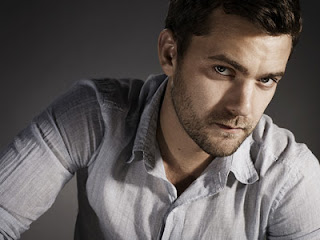
Joshua Jackson

He's an awful lot hotter in Fringe...


...than he ever was in Dawson's Creek.


United States Of Tara


I rushed through the final four episodes of Toni Collette's new Showtime star vehicle, United States Of Tara this morning and I've got to say that in spite of its flaw, I've enjoyed all twelve episodes immensely.  Collette plays Tara, a 35 year-old wife and mother with dissociative identity dissorder and whom, at the most inconvenient of times, is prone to slip into one of several personalities: T, a rambunctious 16 year-old, Buck, a beer-guzzling homophobic male and Alice, a prim and proper housewife.

What makes the show more than just a gimmick is its strong supporting cast.  Tara is surrounded by a loving, suitably dysfunctional family: her husband Max (John Corbett), daughter Kate (Brie Larson), gay son Marshall (Keir Gilchrist) and sister (Rosemarie DeWitt).  Each has their own story, which helps this to feel more like an ensemble drama rather than a star vehicle for Collette.  Created by Juno's Oscar-winning scriptwriter Diablo Cody, some of the arch, affected dialogue of that film has filtered through.  Kate and Marshall especially often come out with expressions that seem too adult or unrealistic.  Thankfully, this is tempered by the writers' keen observations of the family unit and a hefty dose of heartfelt sentiment that gives the show the kind of genuine warmth that Juno was lacking.

Although Collette is impressive in the central role, once we've seen all of her alternative personalities (or "alters") she doesn't have much else to show.  She's not bad by a long stretch.  The way her body movement and facial expressions change whenever she transitions into one of the alters is fun, clever even.  But her performance doesn't have the same subtlety that, say, Michael C. Hall exhibits in Dexter, another Showtime series where the protagonist/antagonist (depending upon which way you look at it) is required to play more than one version of themselves.  The real breakout star is bound to be Keir Gilchrist, whose romancing of Jason, a bi-curious pastor's son is the series' sweetest, most finely-written and acted storyline.  The marvellous Rosemarie DeWitt, so fantastic in both Mad Men and Rachel Is Getting Married, also brings an enormous amount of depth to her discordant relationship with Tara.

Some of the dialogue may grate and the soundtrack might veer a little bit too close to whimsy for some people's tastes, but this is an adorable, occassionally very funny drama series that easily transgresses its gimmicky central concept.